 Urban
How AI Predicts Direct Mail Results written by John Jantsch read more at Duct Tape Marketing
Catch the Full Episode:
 Overview
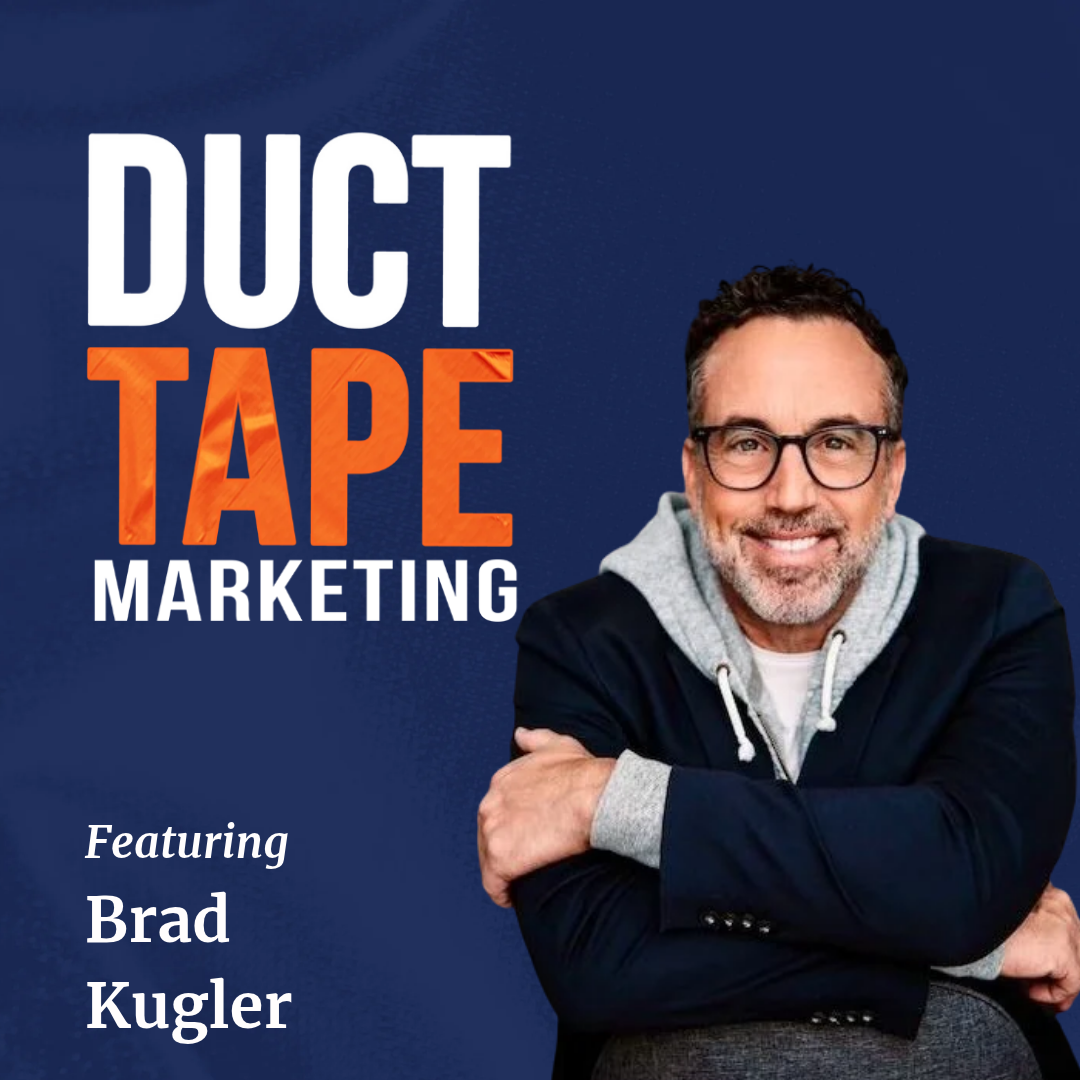
On this episode of the Duct Tape Marketing Podcast, I talk with Brad Kugler, founder of DirectMail2.0. A lot of small business owners wrote off direct mail years ago. Brad explains why a growing group of them is coming back to it, and how AI now lets them estimate a campaign’s response before they spend anything on printing and postage.
Brad spent twenty-six years in VHS and DVD distribution, until streaming wiped out the category. He rebuilt his career as a technology layer on top of direct mail. His company partners with printers, mail houses and agencies to add tracking, reporting and digital ads aimed at the same households that get the postcard. We talk about why the mailbox gets so much more attention than the inbox, and how variable data printing and QR codes make mail as measurable as any digital channel. We also cover how a database of tens of thousands of past campaigns can flag weak creative and bad timing before a campaign goes out.
I also hand Brad a real scenario: a Kansas City remodeling contractor with a $20,000 winter budget. He lays out how he’d build an omnichannel campaign for them and what the smallest useful test looks like. If you own or market a local business and have wondered whether direct mail still pays off, this one gives you a practical way to find out.
Guest bio
Brad Kugler is a Clearwater, Florida entrepreneur and the founder of DirectMail2.0, now rebranding as DM Intel (Direct Marketing and Intelligence). Before direct mail, Kugler spent twenty-six years running his family’s VHS and DVD media distribution business, from 1990 until streaming ended the category in 2016. He went on to build DirectMail2.0, a white-label platform that adds tracking, reporting and digital ad targeting to direct mail campaigns for printers and agencies. The company acquired the Who’s Mailing What archive. Kugler says the combined data covers more than 80,000 campaigns and 2.2 billion mail pieces, and it powers the company’s AI tools for predicting campaign performance.
Key takeaways
- The mailbox is quiet. Most people get three or four pieces of mail a day and hundreds of emails, so a postcard has far less competition for attention.
- Match the channel to the economics. Mail makes sense when a customer is worth four figures or more over time, like recurring landscaping or jewelry. It makes less sense for selling a few dozen pizzas.
- Variable data inkjet printing makes one-to-one personalization affordable, which traditional sheet and web presses couldn’t do.
- Personalized QR codes, text-back numbers and call tracking make a mail piece about as trackable as a digital ad.
- Geofenced digital ads aimed at the same households can add eight to sixteen extra impressions per mail piece. Kugler puts the cost at roughly 10 to 15 cents more per piece.
- Kugler reports a typical 25 to 50 percent lift over mail alone, for a 10 to 15 percent increase in cost.
- Printing and postage are costs you never get back. Testing creative and targeting against past campaign data before you mail is cheap insurance.
- Timing is part of the offer. A landscaper should mail in February, before homeowners have already hired someone in May.
- Reach fewer people more often. On a $20,000 budget, Kugler would reach 7,000 households three times rather than 20,000 once.
- The smallest test worth running is about 2,500 households with three touches. B2B mail works, but it takes more persistence and testing than B2C.
Great moments
- [00:11] – Why some small business owners are taking a second look at direct mail
- [01:13] – Kugler’s first public mention of the rebrand from DirectMail2.0 to DM Intel
- [02:02] – Going from VHS to streaming, and deciding to be the disruptor this time
- [03:37] – How a technology layer sits on top of print without printing anything
- [05:15] – Three pieces of mail versus 300 emails a day
- [05:44] – The pizza shop rule of thumb for when direct mail pays off
- [07:16] – Variable data printing, QR codes and call tracking
- [08:40] – A 25 to 50 percent lift for a 10 to 15 percent increase in cost
- [10:07] – Building a prediction model from more than 80,000 past campaigns
- [11:26] – Why a landscaper should mail in February instead of May
- [12:59] – Live scenario: a Kansas City remodeler with a $20,000 winter budget
- [15:43] – What’s in the omnichannel bundle: QR codes, an identity pixel, call recording and geofenced ads
- [18:14] – Reach 7,000 households three times before 20,000 once
- [19:07] – The smallest direct mail test worth running
- [19:48] – Why B2B direct mail is harder
Memorable quotes
“I needed to re-educate myself, and I needed to be a disruptor and not a disruptee.” – Brad Kugler
“You go somewhere where everybody else isn’t.” – Kugler
“You can track a piece of mail like you track a package now down to your doorstep.” – Kugler
“I would always go for a smaller number who you hit repetitively.” – Kugler
“At least it gives you a better mousetrap than just going with your gut.” – Kugler
Resources
DirectMail2.0 / DM Intel: dm20.com
Duct Tape Marketing: ducttapemarketing.com
John Jantsch (00:11.434)
So most small businesses, most small business owners at least, wrote off direct mail years ago. Well, right now, a handful of operators are kind of rediscovering it. And the AI tools they're now able to employ to predict the response before a single piece gets printed. the owners who dismissed the channel maybe now are sitting on data they never bothered to run the numbers on. Hello, and welcome to another episode of the Duct Tape Marketing Podcast. This is John Jantsch. My guest today is Brad Kugler. He is a
Clearwater, Florida entrepreneur who spent two decades running his family's DVD and media distribution business until, well, streaming video kind of gutted that. rather than go down with the industry, he built Direct Mail 2.0, acquired the direct mail archive of who's mailing what. I used to get that, and now runs DMI or DM Intel.ai, a connected set of tools that pairs AI prediction with direct mail and digital.
Cracking. So hopefully I got all that right. Brad, welcome to the show.
Brad Kugler (01:13.752)
Thank you, John. Happy to be here. And I have to say this is really the first public announcement of what I'm calling our rebrand from Direct Mail 2.0 to DM Intel, Direct Marketing and Intelligence. again, soft launch, but you got the scoop on that, and I'm happy to talk about it and anything else you like to talk about.
John Jantsch (01:34.442)
So I have to tell a little story. There was a little I can't even call it a D V D store. It was a VHS video store, you know, tape store probably before before your time, even called SRO Video, and I remember it fondly, but yes, they they they they went by the wayside, but gosh darn it, I bet you there's some some videos that she had down in the basement there that probably have never been put on stream streaming. She had quite an archive.
Brad Kugler (02:02.662)
It's funny, I've actually heard of that. You know, I I started in the VHS business in nineteen ninety. Okay. That was probably the tail end of SRO even at that point, but I wrote it all the way from its its sort of big proliferation in the early nineties all the way down to nothing in 2016. And I have to say
coming to Direct Mail 2.0 or digital marketing is is an interesting story because I was disrupted. You know, I I made the transition from VHS to DVD, great, no problem. But as streaming proliferated after 2010, the writing was on the wall. And I never finished college. I had been in the business since as I said, you know, 26 years. And I'm looking at
I'm looking at starting a new career with two kids in college. And talk about stressful mortgage, two kids in college. What am I gonna do now? No college degree. Am I even marketable other than being a CEO for a small business? It was it was disconcerting to say the least. And I knew two things. I needed to re-educate myself, and I needed to be a disruptor and not a disruptee.
John Jantsch (03:21.961)
Well, you know, I've I've actually heard you say that or read it somewhere, that line. So I was prepared for you to say that. But on one hand, it's a little ironic because I think a lot of people would say digital disrupted direct mail. and here you're back in direct mail, adding a disruptor. So tell me about that.
Brad Kugler (03:37.807)
So I I'll make it real simple. I don't print or mail anything. I I am a technology layer that sits on top of direct mail. We partner with printers and mail service providers and agencies who do direct mail and we give them a technology edge by providing tracking, reporting tools, and allowing them to digitally target the same people receiving the mail. So in marketing, we all know that it's repetition.
You know, it's repetition that drives home the message. So when you have a piece of direct mail, that's one piece in the mailbox. Now, if I can deliver ads to the same guy receiving that mail piece for pennies per piece, I'm repeating that message. And here's the key with direct mail: direct mail being a physical, tactile thing, stays in memory, scientifically proven much longer than a digital ad you have no recollection of seeing in an email or
browsing the web. So I'm combining the two technologies to sort of create or disrupt direct mail.
John Jantsch (04:44.787)
Yeah. So so we're adding a layer. So this is additive. you know, the because the technology allows us to do that. Go step back just a moment. where where do you feel direct mail sits in general? you know, there there definitely are people said it was dead, and now there's kind of a a chorus of people starting to say, you know what? Nobody does it anymore. And now we've got this other technology, and there's a lot of other advantages to maybe doing it. So where do you sit on on
Just the idea of direct mail as a channel.
Brad Kugler (05:15.436)
So obviously the bright shiny object gets all the attention. And now email and digital are no longer bright shiny objects. Okay. They've been around for a generation. The average person gets six to ten thousand digital images a day. how many pieces are in your mailbox? I get three, maybe four a day. Okay. Yeah. How many emails do you get a day? 300? Yeah. So so here you go.
John Jantsch (05:18.535)
Right, right.
John Jantsch (05:23.081)
Yeah, yeah.
John Jantsch (05:34.473)
Yeah. Yeah. The credit card people have stayed at it. Right. Two thousand. Yeah.
Brad Kugler (05:44.779)
You go somewhere where everybody else isn't. So people are coming back to the mailbox. It's tactical and it's tactile and physical. And then you layer on some of the best direct mail, I'm sorry, digital marketing technologies. And now you've got a hybrid that's best of both worlds. Okay. Direct mail has always converted well, but it converts. If I was running a pizza shop, I wouldn't send a $10,000 direct mail campaign to sell a few dozen pizzas.
You know, if I'm selling jewelry or landscaping that comes every month for years, now you've got a four digit revenue source, it justifies the direct mail. That's that's the rule of thumb here.
John Jantsch (06:28.894)
What are some of the technologies that people are marrying? You know, obviously the printing technology has changed dramatically. I mean, it used to be, you know, ten up on a sheet, start the presses, ink up, go. You know, and now with all of this digital printing, I mean, you know, you see personalization, you see different images, you know, on different I mean, so what has the technology really done to the effectiveness of direct mail?
Brad Kugler (06:48.908)
Yeah. So so you you're well versed and obviously the technology has improved in the direct mail. You can you can have variable data presses that can you know personalize a postcard one to one. So and and there's no real additional cost in investing in the in the infrastructure in the first place. It's you could never do that with a sheet or a web press. It's impossible.
John Jantsch (07:15.668)
Yeah. Yeah.
Brad Kugler (07:16.642)
But you can do that with variable data inkjets. And you know, pretty much if you're in the business now, you got one. So you can do that. Any type of personalization segmentation helps with targeting, it helps with relevancy. So that's a that's a plus. Now, if you start combining that with personalized QR codes, text back numbers, call tracking, you can track a piece of mail like you track a package now down to your doorstep. So you've got tools that make direct mail.
as immediately quantifiable and reportable as any digital product at this point. So so it's caught up to the digital products. where people need help is deploying an omnichannel campaign.
systemically or systematically with a with a print campaign, it's a lot of moving parts. So this is where guys like me coming in that automate that process, time the campaign deployments, time all of the reporting and the digital deployment of digital ad targeting. And now you've got a real product that's easily deployable from for one or two phone calls rather than calling five different guys and agencies. So that it that's what it is. It's it's all technology driven.
John Jantsch (08:26.176)
Right.
John Jantsch (08:32.042)
So I assume there's a a cost involved in employing your platform. So what kind of lifts are you seeing and why?
Brad Kugler (08:40.793)
We're seeing usually 25 to 50% over direct mail alone. And and this is this is the real simple elevator pitch. If I can get you a 25 to 50% lift in your direct mail responses for a 10 to 15% increase in cost, does that work for you? I mean, it's a no-brainer. If would you make an investment like that? And we're seeing that. And and again.
And I sure I'm sure being a marketing guy, you know, there's no guarantees in marketing. There's so many variables that somebody could have a have a have a flat campaign and it does happen. And but for the most case, we do see a lift for a very small increase in price. And if nothing else, the reporting you're getting and the targeting visibility and transparency you're getting with our reporting will help you correct those mistakes in the next mailing.
But like any marketing campaign, there's gotta be a little repetition. There's gotta be a staying partner. It's not a one and done and all of a sudden all the leads run in. You gotta stick with it a little bit, like any type of campaign.
John Jantsch (09:35.136)
Mm-hmm.
John Jantsch (09:40.609)
So one of the things I've seen as people have moved back to direct mail is there's a a lot of the everydoor stuff that that people are doing because it's, you know, in theory it's cheaper. I would say twenty five to thirty percent of it goes in every trash can before it gets to a door. But what what does the predictive modeling, you know, do to to actually save, you know, on on printing costs in general and and postage costs?
Brad Kugler (09:55.756)
At least
Brad Kugler (10:07.001)
So let let me take a step back and explain what our predictive modeling is. We we've launched over 80,000 direct mail campaigns, 2.2 billion pieces of mail in 157 different verticals. We have kept all that data. I knew it would be valuable someday, and I believe with the acquisition of who's mailing what, we have the largest database of direct mail marketing in the world.
So, what we've done with that database, because 20,000 of those campaigns can carry results, who engaged with those campaigns? How were they engaged in? So we can take a piece of creative, we can take your targeting that you're intending to do. And before you spend the money on the print and mail, which are hard cost, never to be recouped, you can feed that data into our model.
John Jantsch (10:55.008)
Mm-hmm.
Brad Kugler (10:57.717)
And it will give you back a kind of benchmark. If the benchmark for a credit card campaign comes at this level, we can dissect your campaign and predict based on past results, is it going to perform better, equal, or worse? And what can you do to perform better? sometimes an easy example is add a QR code, it gives you a 3% lift. make your headline bigger, offer something free. If you're a landscaper, for instance,
John Jantsch (11:18.197)
Mm-hmm.
Brad Kugler (11:26.433)
Start doing your mailing in February rather than May, you know, when people have already found someone. So some of it's obvious, but some of it is very specific for that cohort, that cohort of who you're targeting and what vertical you're in because of all of our past history. So the savings can be infinite. If you've got a campaign that's just time-wronged and creative-wronged, and we avert some of those with our recommendations.
John Jantsch (11:43.071)
Brad Kugler (11:52.996)
Well, you've saved the entire cost of the mailing and not recompensed anything, you know. again, no guarantees. It's all probability rated based on past experience, but past results do not guarantee future results. But at least it gives you a better mousetrap than just going it from your gut, you know?
John Jantsch (12:14.25)
So you were rolling this out, I think, as a as kind of a white label for agencies, is that kind of the model or
Brad Kugler (12:19.201)
Well, the predictive modeling we're doing under our own label. But for the omnichannel marketing suite for pr for for direct mail, yes, that is white labeled. So if you're a cut commercial printer or an agency, you know, they don't ever have to know who we are. You can label it, tweak the campaigns, manage them yourself, and resell it. we offer it what we think is a wholesale, and there's
room on the bone, left there's more meat on the bone so that you can make a margin on it. So we're trying to be that guy that helps the printers and agencies add a revenue and a profit center to their business.
John Jantsch (12:59.336)
All right, so I gave you a little heads up on this, fair warning, but I'm gonna throw out a typical sort of B2C, hyperlocal example and and just kind of how you would approach the omni channel, you know, idea behind this. So I'll I'll read off what I wrote to you. So I've got a client that's looking for handyman leads or actually a modeling contractor or they have a handyman division. In the winter, that business slows down sometimes.
they've got a twenty thousand dollar budget. they are in a metro s midsized metro area, Kansas City, Missouri, mostly upscale work or is is the work that they do. They've already considered some radio and direct mail. but walk me through how you would if you were advising them, how would you how would you design the that entire campaign?
Brad Kugler (13:48.399)
Well, you know, without kind of selling my own products here, I would definitely say feed your proposed campaign into our predictive modeling. Not only will it predict the outcome based on benchmarks of that industry for that time period, for that geography, it'll also show you what the competitors are offering.
And and why is that useful? Like let's say a competitor's offering, buy a five-hour block of handyman time, you know, for 350 bucks, we'll sell it to you for 250. You know, they can see if anybody's got a similar offer or or what other handyman services are being offered in that locale. So the the the point of knowledge being power is key here. And we have the largest database of other direct mail offerings.
So, not only are you going to get a prediction on how well your mailpiece is going to do before you spend a penny on mailing it, so you can tweak it, but you can also see what competitors are offering for similar products in a similar area. So that for sure. As far as economies for scale, our omnichannel platform, dm20.com, will combine a lot of these digital products with the mailing products, and it will
obviously save you time and resources. You are not an agency. You don't have a team there who can actually manage and you know initiate these campaigns. We can do it in a few clicks. So we're offering people that do not have in-house marketing teams the avail to basically have an agency in a box by using us. So there's a lot of benefits and and obviously if we weren't adding to somebody's
bottom line and top line with our campaigns, we wouldn't b have been around for nine years already. So and now with the AI tools we've built, I think we're just a better mousetrap, improving all the time.
John Jantsch (15:38.381)
So so again, part of what I was trying getting at is what would an omni channel approach for for that type of thing look like? Yeah.
Brad Kugler (15:43.869)
I see. So so the bundle would be this. Rather than just a postcard in the mail, we would have trackable QR codes added to every piece. We would track who goes to the website and what we do with our de-anonymizing pixel or identity resolution pixel. We're able to tell you which of those people you mailed to actually made it to the website. So you can track conversions. If they call
Or you want to do a text pan campaign, we'll record those call transactions and engagements. We even record the phone calls to your office that again is perfectly secure that only you can see. So maybe you've got somebody at the front desk who's burning the leads as they come in. At least they're trackable and at least they're memorialized so you can go back to them and recover those failed closes. not to mention a social media campaign. We're doing a
geofenced campaign that will target the same households that are getting the mail. So if if they're getting one piece of mail in the mailbox, we're hoping they get eight to sixteen additional impressions digitally between Meta, that's Instagram and Facebook, Google, they're getting additional campaigns. So it stays top of mind. So we're doing all of that for an extra maybe 10 to 15 cents per piece.
John Jantsch (17:03.125)
And that's y you would provide the list as part of that as well, because that's no.
Brad Kugler (17:07.502)
No, the the list we can help with that. It's not included in that price. So we can either get them the list or you know, assuming that they've mailed before, maybe they have a list or the commercial printer they're using as a list. The list the list acquisition is easy. You know, you tell me what kind of household you're getting. There's thousands of people that can procure that in seconds.
John Jantsch (17:10.603)
Yeah. Yeah.
John Jantsch (17:28.373)
Yeah, yeah. but again, that's that seems like that's a key component to the Omni part, right? Yeah, yeah.
Brad Kugler (17:34.273)
It it absolutely is. And in fact, there's so many vendors of that. We've we've vacillated on do we want to offer this too? I mean it's it's a commodity. List brokerage now is a commodity. You can go to a website and put in your it it'll go and search your customers and it will come up with your ICP. It feeds at this point it's a pretty easy thing to acquire. And you know, to make five percent on that, I don't know that it's worth it when most people already have a source for that.
But we can help if someone doesn't have that.
John Jantsch (18:06.017)
All right, so so a business owner well, I one last question on that. I is that twenty thousand budget realistic for that type of thing or yeah, okay.
Brad Kugler (18:14.125)
absolutely. I mean if you're I'm gonna assume a dollar a target, so you can either hit twenty thousand people one time or you could what I would prefer is they hit seven thousand people three times. Okay. Again, it's that repetitive message. I would always go for a smaller number who you hit repetitively.
John Jantsch (18:34.879)
Yeah. And the nice thing about a local business like that is that they probably can actually target by even even smaller than zips.
Brad Kugler (18:42.691)
yeah, you can go specific households. Now you're not gonna get E D DM that way, but you're gonna pay a little more for postage, but you're gonna target guys that are homeowners versus renters. You're gonna target guys that are gonna really it's a better targeting operation.
John Jantsch (18:47.881)
No. Yeah.
John Jantsch (18:53.611)
Yeah. Right, right.
John Jantsch (18:58.069)
Yeah, yeah, absolutely. So if if if I'm a business owner who still thinks direct mail is dead, what's what's the smallest test that could run th th this winter?
Brad Kugler (19:07.445)
You know, that's a great people ask us that all the time. And and and a lot of people say, well, why don't we try a hundred? And I'm like, man, you know, go see what Google says if you want to target a hundred people. They'll they'll laugh at you, you know. we like to see at least 2,500 on a target, and we like to see at least hitting them three times. That'll give you an indication of of your marketing, is it hitting or not? And you can try something else. But that's that's we' usually what we recommend.
John Jantsch (19:13.281)
Yeah.
Yeah, yeah, yeah, yeah.
John Jantsch (19:23.435)
Yep, okay.
John Jantsch (19:35.521)
Do you find that B to B, B to C, you know, mo I think most people think of direct mail as B to C are you finding any success in for that accounting firm or that law firm that's targeting businesses?
Brad Kugler (19:48.311)
I I'll be honest with you, B2C is trickier because you're trying to find those people. I'm sorry, B you're right. B2B is trickier. B2B is definitely trickier because you can try to target them at their home, which is easy to, you know, with data service, you can find them. Or you risk sending it to a business and that thing makes it to the trash before it makes it to any decision makers' eyes. So you you you have additional challenges B2C with direct mail. It's doable, people are getting success.
John Jantsch (19:53.909)
You mean B to B is trickier. Yeah, okay, yeah. Yeah.
John Jantsch (20:09.599)
Yeah, yeah.
Brad Kugler (20:16.702)
It involves a little more persistence in testing than the B to C does.
John Jantsch (20:21.141)
Yeah. Well, Brad, I appreciate you taking a moment to stop by the Duct Tape Marketing Podcast and talk direct mail. Where where would you have people find out more about what you're doing and connect with you?
Brad Kugler (20:31.501)
the easiest thing to remember is dm two zero dot com. That's dm two zero dot com. It it it'll show all of our direct mail and direct marketing related features there and I'm easy to find from there. LinkedIn, I'm I'm pretty well known there too.
John Jantsch (20:47.649)
Awesome. Awesome. Well again, appreciate you taking a moment and hopefully we'll run into you one of these days out there on the road.
Brad Kugler (20:54.211)
I hope so. Thanks, John. It's been a pleasure.
Sign up to receive email updates
Enter your name and email address below and I'll send you periodic updates about the podcast.