 Urban
How to Protect Your Business Name With a Trademark written by John Jantsch read more at Duct Tape Marketing
Catch the Full Episode
 Overview
You found a great name, bought the domain, locked in the social handles and filed the LLC. It feels settled. But none of those steps gives you the legal right to use the name, and the conflict usually shows up after the logo is designed and the launch date is on the calendar.
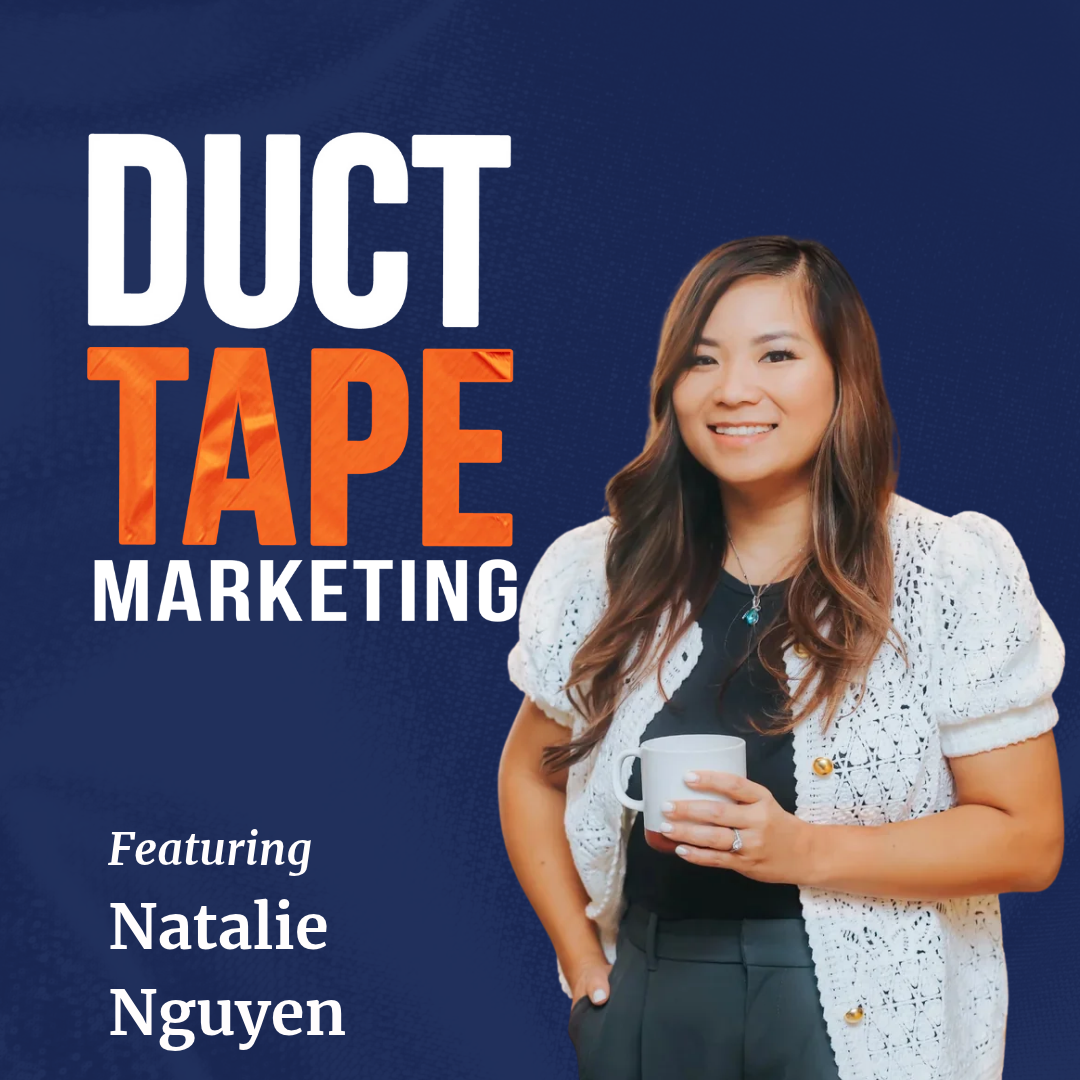
On this episode of the Duct Tape Marketing Podcast, I talk with trademark attorney Natalie Nguyen, founder of Prolumis Legal in Oklahoma City, about how to trademark a business name the right way. We cover why a Google search isn’t a clearance search, how trademark classes work, what it costs when someone else registers your name first, and why those cheap filing offers in your inbox can create bigger problems later.
This one is for small business owners, entrepreneurs, authors and marketing agencies who name things for a living. If you’re launching a business, a product line or a book, listen before you spend money on design.
Guest Bio
Natalie Nguyen is a trademark attorney and the founder of Prolumis Legal in Oklahoma City. She has filed more than 2,000 trademark applications, building her experience in a high-volume national trademark practice and an in-house role at a Fortune 100 company. Nguyen is licensed in Texas and Oklahoma.
She founded Prolumis Legal on the belief that trademark protection should start with strategy, built around where a business is headed. She works with entrepreneurs, branding agencies, authors, publishers and podcasters on clearance, registration and brand protection.
Key Takeaways
- Forming an LLC and registering a domain gives you a business entity and a web address. Trademark rights come from registering with the United States Patent and Trademark Office (USPTO).
- A Google search will catch identical names, but trademark confusion can come from names that are only similar.
- Clearance has to look beyond your exact goods and services to anything a consumer might see as related.
- Trademarks are registered by class. Delta Air Lines, Delta Faucet and Delta Dental can all coexist because they sell very different things.
- Big brands can still push back across classes if they believe a newcomer is trading on their goodwill.
- Using a name for decades gives you common law rights, but defending them means a cancellation fight that is costly, slow and uncertain.
- Nguyen’s triage for any name: Is it distinctive? Is it available? Can it grow with your business?
- Branding agencies help their clients most when they bring a trademark attorney in before presenting final name options.
- Budget filing services rarely include a proper search or careful goods and services descriptions, and the USPTO filing fee alone is $350 per class.
- Anyone can use TM. Only marks registered with the USPTO can use ®. Once you’re registered, you’re responsible for policing your mark, starting with a cease and desist letter.
Great Moments (Timestamps)
[00:01] – The name feels settled, until it isn’t
[01:06] – What 2,000 trademark filings have shown Nguyen about when owners discover a problem
[01:51] – A family business using its name for fifty years finds someone else already registered it
[02:53] – Common law rights and why defending them is expensive
[03:56] – The marketer’s view of a name versus the trademark attorney’s view
[04:58] – The biggest misconception: the LLC and the domain
[05:24] – Why a Google search misses potential conflicts
[06:08] – Using the USPTO’s own search tool as a starting point
[06:55] – The Delta example and how trademark classes work
[07:24] – False association and borrowing someone else’s goodwill
[08:09] – Triage for a name that’s already launched
[08:31] – The Brand Protection Scorecard
[10:08] – ProlumisClear and why branding agencies should involve an attorney early
[10:55] – The retailer contract that hinged on a trademark someone else had filed
[12:17] – Are the $275 trademark filing offers worth it?
[14:24] – Disclaimers and why I couldn’t claim the word “marketing”
[15:23] – Can you trademark a book title?
[16:38] – Date of first use anywhere versus date of first use in commerce
[17:37] – Protecting a trademark outside the United States
[18:36] – TM versus ®
[19:47] – How to police your trademark
[21:20] – How to connect with Nguyen
Memorable Quotes
“Just because you got the LLC, just because you got the domain, your trademark is not protected.” Nguyen
“It doesn’t have to be identical for there to be trademark confusion.” Nguyen
“A trademark is not just about filing a trademark. You need to come up with a strategy from the beginning.” Nguyen
“If there’s any trademark attorney that is telling you that they can file a trademark for $200, you’re going to get what you’re paying for.” Nguyen
“I would much rather have that conversation in the beginning than later on, after they’ve already invested thousands of dollars.” Nguyen
Resources
-
-
- Prolumis Legal: prolumislegal.com
- Email Natalie: natalie@prolumislegal.com
-
John Jantsch (00:01.166)
So you check out a great domain name, you lock in the social handles, you file the LLC, and you feel like the name's settled. But unfortunately, none of that confirms that you can actually legally use it. And the real conflict doesn't show up until the logo's designed, the packages are printed, the launch dates already on the calendar. Hello and welcome to another episode of the Duct Tape Marketing Podcast. This is John Jantsch and my guest today is Natalie Nguyen. She's a trademark attorney and founder of
Prolymus legal in Oklahoma City. She's filed more than two thousand trademark applications after cutting her teeth in a high volume national trademark practice and an in-house role at a Fortune One Hundred Company. She's licensed in Texas and Oklahoma, and we're gonna talk about trademarks and naming. So Natalie, welcome to the show.
Natalie Nguyen (00:49.586)
Hi, thank you. Thank you for having me, John.
John Jantsch (00:52.472)
So as I said, you've worked with more than two thousand trademark filings. what's the moment when a business owner realizes the name they've already built a brand around is is a problem? When does that usually occur?
Natalie Nguyen (01:06.62)
Well, so after filing over 2,000 trademark applications, I I feel like I've I've seen everything. I've s the there are some entrepreneurs, some business who come to me and they have a new venture, they have a new product line, and this is just starting out. They have a couple names that they want to look at, but then there are people who come to me where they've been using the name for a while, saw that somebody is infringing, and now they are scared. So
John Jantsch (01:30.606)
Right, right.
Natalie Nguyen (01:36.689)
I've seen it all.
John Jantsch (01:38.542)
So so and and let's say you've gone down the track and you've got all this, you know, you you talked about people are infringing, but in some cases somebody's already been using that and maybe you're gonna get a cease and assist letter, right? Yeah.
Natalie Nguyen (01:51.761)
Right. Yes. Yes, definitely. cease and desist. I've I've done both. I sent them out, I've received them. And I I the the the worst, I think the worst is when there's somebody who's been using the name. I have a a client who's been using a his name for over fifty years. It's a family business, they fifty years, that's a long time. And he's built so much goodwill over that period of time.
John Jantsch (01:58.243)
Yeah. Yeah.
John Jantsch (02:12.878)
Mm.
John Jantsch (02:17.517)
Yeah, yeah.
Natalie Nguyen (02:21.776)
And he came to me because he saw that somebody was using his trademark. And I did the search, found that they've already registered that same name. And now he's telling me, you know, he's he's so disappointed. He said he's wished that he has registered it sooner.
John Jantsch (02:37.58)
Yeah. So so w I'm gonna follow on on that, even though this is gonna take me way off my right line of questions and we're gonna go deep in the weeds. The fact that he's been using it for fifty years, does that give him some sort of common law use? I mean the fact that somebody just came along and registered it, does that exempt him from using it?
Natalie Nguyen (02:53.541)
It does.
So he does have common law trademark rights, as but but it it he would have to he would have to fight for it. So now instead of filing the trademark, we are talking about protecting his trademark. We're talking about cancellation, it will be costly, it'll be time consuming, and there's no guarantee.
John Jantsch (02:58.743)
Okay.
John Jantsch (03:05.09)
Yeah, yeah. Right.
John Jantsch (03:18.552)
So
A a a great name, it can be distinctive and memorable. I mean, you know, I'm a marketer. I mean, we're always looking for branding, everything, right? but if a name's not available to use, I mean, are those two separate questions? Like, can you can you like a product is probably a example where it comes up all the time? It's like, we're just doing it for this very specific thing, but somebody else is using it in another way. because i is there
It does it come down to a legal thing or does it come down to more of like, well, you're gonna create confusion?
Natalie Nguyen (03:56.253)
So for a brand, for a new product name, it's we're talking when we're talking about clearance and when we're talking about protecting the brand, I think that's two different things. And for a marketer, for or marketing professional like yourself, John, and I mean when you look at the brand, you're looking at whether this name resonates with the customers, whether this name gives the brand identity.
John Jantsch (03:59.684)
Yeah.
Natalie Nguyen (04:21.998)
And as a trademark attorney, I'm looking at it from availability, a legal availability standpoint. if this name is available, if there's gonna be confusion.
John Jantsch (04:26.818)
Mm-hmm.
John Jantsch (04:36.504)
So I think a lot of business owners feel like they've got prote you know, buying an LLC. Like you go through and do all this, you form an LLC. I mean, so you you do all this legal paperwork, you file with the state, it's like, well, I'm I'm protected, right? I've got the domain name, I've got the LLC. so so tell me when somebody comes to you and says, I've already got this name, why does that not actually protect them?
Natalie Nguyen (04:58.724)
It is the biggest misconception that I see. just because you got the LOC, just because you got the domain, your trademark is not protected. The trademark rights, you need to file get it registered with the USPTO, which is the United States Patent and Trademark Office.
John Jantsch (05:05.262)
Yeah. Yeah.
John Jantsch (05:12.408)
Mm-hmm. Yeah.
Yeah. So I did a Google search. Nobody else seemed to be using it. So I'm good, right?
Natalie Nguyen (05:24.696)
No, that no. a Google search could it it will miss it's it's so so if there's anything that's I that's that's identical, then yeah, it it will come up with that. But anything that it doesn't have to be identical for there to be trademark confusion.
John Jantsch (05:38.338)
Right. Right, right, right.
John Jantsch (05:47.225)
So how if some is there a way for somebody who is not come to somebody like you yet? They're just kind of thinking, this would be a good name. Before we go any further, let's do a little research. What are there some tools, websites, places where they can at least get an idea of what they're up against?
Natalie Nguyen (06:08.442)
Yes, so Google, like you said, that's a good starting point. I would also recommend getting onto the USPTO website because they do have their own tool. It's called Test Trademark Search, and you can do a search on there, but it it that's gonna be the best starting point, I think, but it you'd have to look at not just the specific goods and services that you'd be operating in, but also anything that could be considered related to.
John Jantsch (06:11.704)
Mm-hmm. Right.
John Jantsch (06:20.002)
Yeah. Right.
John Jantsch (06:37.324)
Yeah, so obviously finding direct matches is pretty easy. But but and then there's categories, right? And classes of like you can register a domain name or I'm sorry, you can register a trademark for these types of goods and services, but somebody else can also have it for others. Is that is that accurate? Yeah.
Natalie Nguyen (06:40.72)
Yes.
Natalie Nguyen (06:44.08)
Yes, classes.
Natalie Nguyen (06:55.782)
Yes, yes. a really good example that I like to bring up is Delta. So there's Delta Airlines and then there's also Delta Faucet, Delta Sinks, Delta Dental, exactly. So those are all different goods and services.
John Jantsch (07:00.552)
Mm. Yeah. Delta Delta Dental. Yeah. Yeah. Yeah. Yeah.
Yeah. But they but they're so so and so then somebody couldn't come along like somebody could come along and do Delta Dog Food, right? Maybe. but they could no nobody could ever come along and do Delta. Is that would that be accurate?
Natalie Nguyen (07:24.85)
So it depends on the class and s and depends on the goods and services. But it also there's something else that's called false association and using somebody's goodwill. So for example, you know, Delta is a big pretty big brand, there's United or the airline, the Faucet. If they are litigious, then they could still send out a cease and desist saying that if this is to register, then you'll be eroding their goodwill.
John Jantsch (07:46.819)
Yeah, yeah.
John Jantsch (07:52.685)
Yeah, because s some of the consideration from the trademark office is will this be confusing to the consumer, right? Yeah. So all right, I've already launched a name. I'm down to track. I realized after listening to this episode that I have done zero clearance. You know, what's the triage look like for that?
Natalie Nguyen (07:59.525)
Exactly. Yes.
Natalie Nguyen (08:09.348)
Yeah.
So I think you'd first have to look at whether your name is distinctive. And then the second part is whether it is available. Then third is whether the name can grow with your brand.
John Jantsch (08:31.01)
So you actually have a scorecard, I think I saw on your website. Is that right? The brand protection scorecard. and and we'd love to share that with folks so but that they can sort of self assess where they are. what is it what is that scorecard going to tell people? or or maybe what does it leave out? 'Cause there are certain things that that can only be discovered with a conversation with you.
Natalie Nguyen (08:36.922)
I do, yes.
Natalie Nguyen (08:43.729)
Yes.
Natalie Nguyen (08:56.154)
Mm-hmm. Mm-hmm. Yeah, so that that's just a very preliminary look at their brand, at what they have already registered, what they're planning to do. but it doesn't look at their business as a whole. The one of the biggest reasons that I found Prolumis my firm is because I believe that a trademark is not just about filing a trademark. You need to come up with a strategy from the beginning. And in order to do that, you need to know what the goals of your business.
John Jantsch (09:20.152)
Mm-hmm, mm-hmm.
Natalie Nguyen (09:25.86)
are where it's heading and that's how you can come up with a good strategy to protect your brand from the beginning.
John Jantsch (09:25.964)
Right. Yeah.
John Jantsch (09:34.243)
Yeah, I mean, I I've actually worked with organizations that were fairly new and they knew they were going to have a whole suite of products or a family of products at some point. And so we actually went as far as saying, well, this stuff's way down the road, but let's do it now if we think we're going there. because that's you know, that's gonna be the only way to really be able to plan, but also to make sure that we we protect it. So do you work with any branding agencies? Because I know a lot of branding agencies just do the creative work and then they're like
Natalie Nguyen (09:40.274)
Mm-hmm. Mm-hmm.
Natalie Nguyen (09:47.28)
Yeah, exactly.
John Jantsch (10:01.816)
Go get We did a aren't these great storyboards? so do you work with any agencies to say let's pump the brakes here? Yeah.
Natalie Nguyen (10:03.761)
Yeah.
Natalie Nguyen (10:08.474)
Yes. Yes. So I think that it's really important to get so to have the the branding agency bring in a trademark attorney from the beginning because I think that that would only help their clients. I do have on my website is ProlumisClear and that's what I offer to branding agencies. We look at just the top five names and then we do the the clearance search and give our recommendations.
John Jantsch (10:19.566)
Mm-hmm.
John Jantsch (10:28.728)
John Jantsch (10:37.976)
So you're you you mentioned in your bio that you worked at a high volume national trademark practice, also inside of Fortune 100 company. Is there anything that you saw inside of those experiences that said, I've got to start this agency that I or this practice that I have now?
Natalie Nguyen (10:55.595)
Yes. so having worked at my high volume firm, I I keep seeing the same things. It's always you know, our clients come, there are clients come who who have who have been operating for so long, using this name for so long, and then they find out that they that somebody has already registered, or there's another client who is in talks with a major retailer.
And part of the contract was that they get the trademark registered. Then they found out somebody already applied for it. And all of these things, I feel like if I, as a trademark strategist, was brought in from the beginning, having that conversation with them in the beginning, I would much rather do that than having the conversation later on after they've already invested thousands of dollars.
John Jantsch (11:48.825)
So I get email pitches from I can't even remember the name of it now, but there's a handful of these companies out there that that you know wanna file they basically sc scrub the web and they look at anybody's name and say, You should trademark this. and they want to do it for two hundred and seventy five dollars or something like that plus the trademark fee. Are those are are those legit? Is there any value in in going that route?
Natalie Nguyen (12:04.273)
Yes.
Natalie Nguyen (12:17.01)
Sadly, they're I I think the business itself may be legitimate, but if there's any trademark attorney that is telling you that they can file a trademark for $200, you're not gonna get you're gonna get what you're paying for. Your the trademark filing fee by itself is already $350 per class. So they're
John Jantsch (12:33.974)
Yeah, yeah.
Natalie Nguyen (12:40.678)
they're not gonna do the search there for you correctly. There's not gonna be a trademark attorney that will be looking at your business from the beginning and filing, making sure the filing is correct. That that's very important. Choosing the correct goods and services according to your business. That's also important. You don't know how many times I I I see I pull up an application that some another a client got another trademark firm to do. And I mean I
Who don't I who knows if that's even an attorney, but I would see the goods and services as I I make clothing. Like, okay, that's you're gonna get you're gonna get an office action. and then these are just I think these are just very nuanced problems that they can they can get a head off early on.
John Jantsch (13:18.05)
Yeah. Yeah.
John Jantsch (13:34.497)
Mm-hmm. Yeah. So I have several trademarks in my business, one for duct tape marketing. I felt like it was a a trade tr trademarkable name. And I do recall that I had to I had to I can't remember the exact wording, but I had to verify that I was not getting a trademark for marketing. but that was only this this use
Natalie Nguyen (13:44.122)
I took a look at it in it.
Natalie Nguyen (14:00.146)
It's a disclaimer.
John Jantsch (14:02.834)
and and actually just for these classes. So not email marketing or not, you know, some other form of marketing, but just marketing consulting only. And so is that part of the process? I mean, d can you typically expect that you're going to have to disclaim, you know, that that you can't trademark something as broad as a part of your name?
Natalie Nguyen (14:24.694)
yes, in most cases. But then it also comes down to what kind of goods and services you provide. So as if if it's marketing services in your case, then yes, marketing would the examiner would require a disclaimer. I don't always provide a disclaimer initially. it just depends on what the goods and services are exactly and what the name is. Because it comes down to, for an example, if it's a website name, you don't have to disclaim the dot com.
John Jantsch (14:51.522)
Mm-hmm.
Natalie Nguyen (14:54.475)
if the wording before the dot com is more distinctive.
John Jantsch (15:00.056)
Hm. Okay. let me I I I have written several books and I get I have a lot of authors on this show. and every now and then the the the question will come up, somebody will write a book with a certain title, and then somebody will come along five years later and use the exact same title. Are are book titles trademarkable or is that fall into a whole nother category?
Natalie Nguyen (15:23.11)
Book titles are definitely, they can be registered as a trademark. But there is a rule, it's called a single work product rule. So it has to be more than just a single work product. So it has to be part of a series. Or if you have at least two different covers with the same title, then you can submit the proof of use, which we just call it so pictures of the cover and be able to get.
John Jantsch (15:33.772)
Mm, mm.
Yeah.
John Jantsch (15:49.486)
Yeah. Yeah. Yeah.
Natalie Nguyen (15:53.031)
that name registered. And I actually have helped a lot of book publishers, authors, podcasts, they also fall under that. any creative works.
John Jantsch (16:00.824)
Mm.
John Jantsch (16:06.04)
So I ha that you you mentioned proof of work. another instance of something I trademarked was a process that that's proprietary to us and the name was unique enough to to be able to trademark it. but when I trademarked it, I had actually been using it for a number of years prior to that. And so I had to at least attempt to prove when I had first started using it.
Bef and i is that a very common practice as well.
Natalie Nguyen (16:34.437)
Right.
Natalie Nguyen (16:38.586)
Yes, you have to provide the date of so there are two dates that are important. Data first use anywhere and data first use in commerce. So data first use anywhere would be whenever you first started using that name to provide that specific good or service to the public. Data first use in commerce is when you actually make sales. Anything that's within interstate commerce that's
John Jantsch (16:52.109)
Mm-hmm.
Natalie Nguyen (17:05.5)
can be regulated by Congress. So that means it needs to be in the United States, making sales across state lines or shipping across state lines. So it does get into pretty specifics.
John Jantsch (17:18.306)
So so you just keep launching into new are new areas that I need to ask about. So are we talking only US when a at a like if I get a trademark, is that only valid in the US? And if I want to protect that in other countries, I have to actually go through their process as well?
Natalie Nguyen (17:37.843)
So the USPTO is just in the United States. That trademark registration will give you the presumption of legal ownership in the United States. If you want to be able to, so if you want to move outside the United States and then depending on the country, you should get the trademark registered in that country. So the United States is under something called a Madrid.
John Jantsch (17:42.627)
Yeah.
Natalie Nguyen (18:05.158)
convention. So under the Madrid tr treaty, any countries that is under that, basically you can use the same first date of use as priority in that country in order to get the trademark in the country where you want to operate in.
John Jantsch (18:05.41)
Mm.
John Jantsch (18:23.278)
So this may seem like a silly question, but I'm sure other people have this. I see T I see an R with a circle around it, I see S What are those different d marks intended designate?
Natalie Nguyen (18:36.004)
Yes, and that's one of the more common questions that I get all the time. So TM is anybody can use TM. TM is just saying that you are using that as a trademark. You can use it next to your logo, you can use it next to your name. an R is for registered. You can only use the R if you have already registered your trademark with the USPTO, the United States Patent and Trademark Office.
John Jantsch (18:38.786)
Yeah.
John Jantsch (18:48.93)
Huh, okay.
John Jantsch (18:58.988)
S so if there are things I feel like are proprietary to me, should I be putting T on them just as a way to try to tell people, Hey, I think this is mine?
Natalie Nguyen (19:08.39)
Yes. I think that that that's yes, y you're basically saying that this is my trademark, this is my brand. So yes, you but you don't have to. It's not a requirement.
John Jantsch (19:16.834)
Yeah. Right, right, right. I guess I'm just thinking more of as a as sort of a claim. so that because now now let's go to another unfortunate topic. Let's say I have registered something and I do use it in my business, and I start seeing other people use it. what do I need to do? I mean, I I I have heard at least that if you don't at least attempt to protect your trademark, you can actually lose it. So what do I have to do to to protect my trademark?
Natalie Nguyen (19:47.709)
So you have to police your own trademark. You need to take the actions to protect your trademark. So the first step would be to send out a cease and desist. A cease and desist is a letter, basically just a notice telling the possible infringer that the they are using your trademark and to stop using it.
John Jantsch (20:00.91)
Yeah. Yeah.
John Jantsch (20:11.192)
So and and is that something that are there services that do? I'm sure there are services that do that, aren't there?
Natalie Nguyen (20:17.414)
So I mean anybody can send out a cease and desist. Anybody but
John Jantsch (20:20.662)
No, but I mean that do kind of the whole thing. Like they monitor and they're constantly looking and any time they see it, they just ping I I gotta believe there are services out there that do that for people. Yeah.
Natalie Nguyen (20:25.539)
yeah.
Yes. Yes. Yes. I'm I'm I'm I'm sure that there are. but I you wanna make sure that you do that that you do have some kind of case to send out a cease and desist because that's basically taking the first step in possibly litigation. So you wanna make sure that the I I I would recommend going to a trademark attorney.
John Jantsch (20:46.104)
Yeah, yeah, yeah. Yeah, yeah.
John Jantsch (20:55.82)
Yeah, okay. Yeah. Good. So if if somebody's listening to this and they think I've got this name and I've got a launch date and I've actually gone to a logo, but we haven't done much of this. how would they get a hold of you? Or what would you what would you tell them to do or or connect with you to find out really if you're even the right solution for what what they're
Natalie Nguyen (21:20.154)
Yeah, so my website it has my contact information on there. You can book a free consultation. We can talk about your launch, your business, any trademark issues that you might have. And my email is Natalie at Prolumaslegal.com, P-R-O-L-U-M-I-S legal.com. And that is also the website address. Yeah.
John Jantsch (21:40.876)
And that and that's the website address I'm assuming too. Yeah. Yeah yeah. Awesome. Well, I appreciate you taking a moment to stop by the Duct Tape Marketing Podcast and hopefully we'll run into you one of these days out there on the road.
Natalie Nguyen (21:53.715)
Thank you. Thank you for having me.
Sign up to receive email updates
Enter your name and email address below and I'll send you periodic updates about the podcast.